














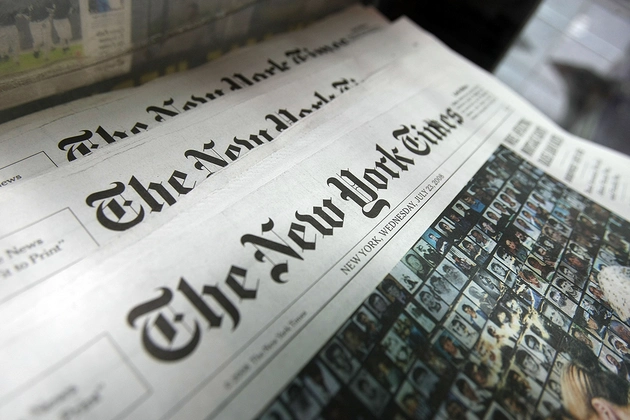
Professional newsrooms, like The New York Times, are organizations that have to balance both reporting and ethical standards. Their goal is to produce reliable news, which involves careful planning and coordination across their multiple departments. By taking a Pierce College class on beginning journalism, I learned how the industry functions in detail.
Roles and Jobs at Newsrooms
At the top of a newsroom is the publisher, who oversees the business side of the operation. This person, in some cases, might even own the newsroom. The publisher manages the finances it takes to create stories for sales. They also have to make careful investments to make sure that the organization can support its staff. While the publisher does not determine which stories are published daily, their work gives the foundation that allows journalists to report effectively and independently.
Choosing what stories to cover
Newsrooms carefully decide which stories to cover based on audience, editorial mission, and geographic relevance. Newsrooms like The New York Times focus on stories with global impact. On the other hand, local newspapers like the HTLA circuit focus on issues directly affecting our community
Advertising
A major source of revenue for news organizations is advertising. The advertisers are the group of people who give and decide salaries and decide the costs it takes to produce the stories. Despite its importance, advertising is actually intentionally separated from editorial operations by what journalists call “the wall.” This makes sure that business concerns and advertiser interests do not influence the reporting process. Even when a major advertiser is involved in a controversial situation, the newsroom is expected to cover it objectively, but sometimes this doesn’t happen today.
The start of journalism in the United States
The history of journalism in the United States started in the late 19th century, when yellow journalism became widespread, with exaggerated stories and dramatic illustrations designed to attract readers. Publishers like William Randolph Hearst and Joseph Pulitzer focused on producing and selling newspapers over factual reporting. Although modern journalism mostly focuses on fairness and ethics, yellow journalism highlighted the challenges news organizations have historically faced in maintaining the public’s trust.
Trust in the industry and challenges regarding tech
Trust in journalism today is harder to come by for a lot of people. With so much information online, including social media posts, it’s become very easy for false or misleading stories to spread quickly. Some news outlets are being accused of being biased or spreading non-factual information, and this makes it difficult for readers to know what to believe. We see that scandals and clickbait can make people question whether a story is really important or just meant to get attention, as was the goal in the 19th century. This, in effect, makes it much harder for newsrooms to balance their audience engagement. Technology has created new opportunities for reporting and distribution, but also new pressures, making the separation of business and editorial interests harder now than ever.
Sources
Pierce College class