



Today, artists are going through hoops for their work to be put into the world. An artist labors to create their music, often paying thousands of dollars to engineers and producers to finish a project. Once the project is completed, the artist uses a self-distributing platform like Distrokid or LANDR to put out their work – in fact, only 5% of artists on Spotify are signed to a label. The streaming services will pay as little as possible to this artist, and for their hard work, they will receive little royalties; Spotify CEO Daniel Ek makes more money than Taylor Swift, Jay Z, and Rihanna combined. 100,000 songs are released on Spotify every day, most of which are often overlooked. The only way this artist can break through this algorithm is to post consistently and at such a rapid pace to differentiate themselves from everyone else who is trying to make it. The artist cannot win against the bots that produce AI slop, making up ten percent of music uploaded on streaming services, benefiting from the royalties produced by human attention. The artist says, “On second thought, perhaps I’d ought to find a job in marketing”. In our current culture, art is dying due to artificial intelligence, a lack of media literacy, and unrestricted late-stage capitalism.
To first claim that art is falling into its demise, one must thoroughly define it. However, the definition of art is obscure and pure theory– it’s philosophical. Nietzsche once said, “Art is essentially the affirmation, the blessing, and the deification of existence.” Plato would have argued that “art imitates nature”, but somebody taped a banana onto a wall and called it art. People paint geometric circles in various colors and call it abstract, all the while the everyday person looks down on this form of art. Truthfully, art will never be defined as no definition could thoroughly encapsulate what it truly is, and what it does for humanity. Brian Eno, the pioneer of ambient music and the record producer for several renowned artists like David Bowie and U2, attempts to define this concept in his book, What Art Does (An Unfinished Theory). In this book, he analyzes the necessity for art, its definition, and its impact.
One of the interesting definitions he provides is “Art is the continuation of play into adulthood. We keep playing as adults because we need to keep learning.” Children learn about the ways in which our world works through play; pretending to be doctors, mothers, and astronauts allows children to gauge how they feel about being in those situations in escapable forms, truly similar to watching a movie or listening to a song. The emotion we feel when watching a film is real and escapable, allowing us to learn about what we like in a safer environment; we can turn off the television or leave the theater. Perhaps watching a film about the horrors of war can allow us to empathize with the people in those situations, allowing us to advocate against it more than any combination of impersonal statistics would. Eno suggests that art helps us stimulate emotion in a detachable way.
Eno argues that “we make art all the time but don’t usually call it that”; humans have a knack for creativity, and we will implement this in circumstances where we have creative freedom. An example he provides is the designs on a screwdriver handle; the arbitrariness of the aesthetic quality of a screwdriver handle for the job the tool does allows us to make it visually pleasing. This goes for fashion, dance, furniture, and more; we don’t need to have an “I heart NY” design for a shirt to serve its function, yet we still choose to print this text. Art can also produce feelings that are undefined by any use of diction. Emotions are notorious for being endlessly obscure and unable to pin down, and art is the language that we use to convey these emotions. Perhaps when listening to a Lorde song, we feel this melancholy nostalgia along with her, and when listening to Charli XCX, we want to be a party girl; that is what art does. However, art can mean different things for different people; each piece creates a life of its own with personal context; nobody consumes a piece of art as anyone else does. A meme can last two weeks, but is still as significant as a piece from the Louvre, just as an insect has the same significance as an elephant. Having this definition at hand, and with newer technology coming into play, could we consider AI to be art?
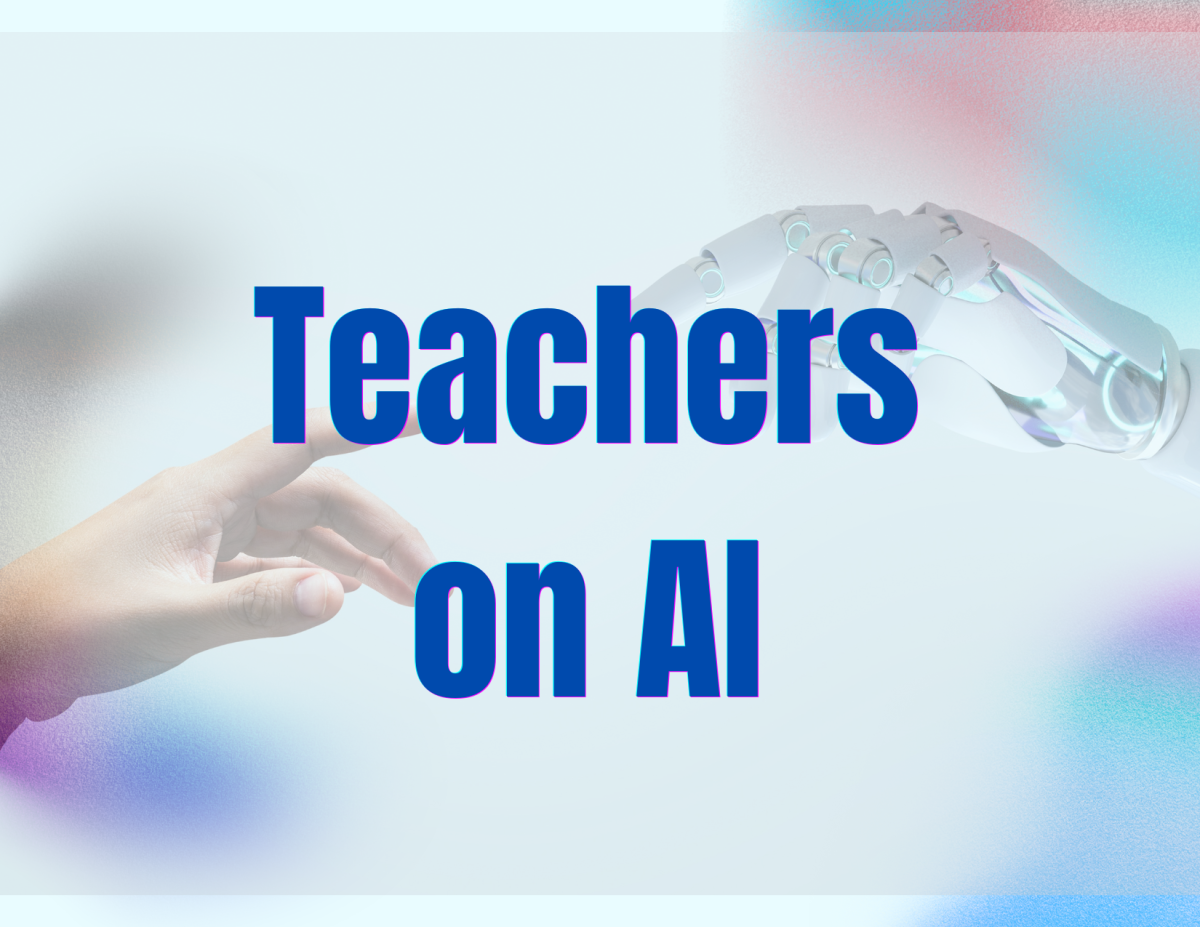
Recent debates have been discussing the impact artificial intelligence will have on artists, and we already see it infiltrating our artistic spaces. Many artists are beginning to fear for their place in society as generative technology takes over. We are already beginning to see AI actors like Tilly Norwood that can work without grueling hours or adhering to labor laws. We are constantly bombarded with AI slop penetrating our algorithms, and we are beginning to not think anything of it. As Joshua Rothman says in The New Yorker article, “A.I. Is Coming for Culture.”, “One study found that more than half of the text on the web had been modified by A.I., and an increasing number of ‘influencers’ look to be entirely A.I.-generated.” So much of our current culture is beginning to be generative content; TV shows, podcasts, and music are looking to be made as cheaply and quickly as possible to break through the algorithm. Famed artists like Imogen Heap or Grimes are beginning to experiment with this new technology. Heap’s AI persona, A.I.mogen has the ability to hit notes that Imogen Heap’s voice physically cannot replicate. This use of AI to expand vocal ranges isn’t necessarily a betrayal of art, however, new technology made for our convenience is notorious for limiting our capacity to be patient and learn to do things. Perhaps Imogen Heap’s experimentation with generative content isn’t entirely skimming away at her artistic integrity, but a reliance on it could. Critics fear that not drawing a line could mean more slop put out into streaming platforms.
However, AI doesn’t seem to be nearly as effective as one of the human touch. Most AI art is brushed off as slop; at worst, it is frowned upon, and at best, it is used for comedic “meme” purposes. Rotham says, “Strictly speaking, the result was derivative, fill-in-the-blank.” You can see this typically happening: ChatGPT giving only strategic, bullet-pointed advice, empty of understanding. Cal Newport wrote about his observations as a college professor in The New Yorker article, “Chris came to realize that ChatGPT’s writing wasn’t up to his standards.” Newport speaks about a former student who attempted to use artificial intelligence to plagiarize a paper, however, the technology couldn’t recreate what a human could. The article showcases how soulless generative writing is in most cases.
Many people are not fearing the takeover of AI in artistic communities as they believe that there is no way this technology could ever encapsulate the cadence of a human. AI is still taking over other fields of work, such as engineering, tutoring, and customer service. As said in “Will A.I. Trap You in the ‘Permanent Underclass’?” Kyle Chayka says that “Entry-level software engineers are facing particular difficulty”. He refers to the grueling hours worked at current jobs in Silicon Valley, as generative content is perfect for the code work necessary to accomplish these tasks. Perhaps AI can take over software engineering, tutoring, and customer service, but it remains to have limited sway over art; perhaps there may be hope for the artists of the future. However, art critics will know to distinguish real art from soulless slop, but in this current culture, in which we lack media literacy and intellectualism, would that even matter to consumers if the generative content is objectively bad?
Currently, with the rise of AI, short-form content, and anti-intellectualist movements, media literacy has been at an all-time low. Chappel Roan could say “I don’t know anyone who’s happy and has children at this age.” on the Call Her Daddy podcast, and the internet continues to misconstrue that as a hatred of motherhood rather than an acknowledgment of the hardships that new mothers go through in this economy. FOX News can continuously show fake news while ridiculing their illiterate viewers, and we still aren’t discerning their claims from the truth. Every comment section has a loud voice with a “rage bait-y” opinion that we believe to be true without giving it a second thought. In the age of short-form content, we consume mindless, dopamine rushes for entertainment. The National Library of Medicine says “addiction tendencies to short-form videos might have negative impacts on neural activity underlying attentional functioning.” Short-form content is essentially breaking down our intellect, which in turn makes us think less critically. Our inability to interpret nuance makes us susceptible to being sheep. Up to twenty percent of American adults are “functionally illiterate,” according to the National Literacy Institute. Not only this, but our consumption of short-form content lowers our attention span, only allowing us to glance at a painting and walk away; more people want to turn off their brains under late-stage capitalism, and less people want to consume art. Perhaps AI will never replicate a human; however, with our current culture, most people do not value real artists, and even if we do, there is just so much art, it is impossible to get to it all. Schools are teaching students to survive in capitalism rather than in the world, and in most cases, people aren’t even surviving capitalism.
Currently, art is valued monetarily; record companies are expecting new artists to post six times a day on social media to break through the algorithm, dropping them if they aren’t becoming an overnight success. The market is too oversaturated because everyone simply wants success. Due to internet niches, we lack a broader sense of community, and the monoculture dies. As Goia, a jazz critic, says, “If Bach were alive today, ‘he’d spend a few weeks trying to break into the L.A. music scene and say ‘Ah, I’ll be a hedge-fund manager instead.’’” Not only does our culture not have the time to value art, but thousands of paintings are produced by the minute, this population makes it almost impossible for the artist to be influential at all. We used to have Madonna and Elvis Presley, who were spotlighted on MTV, and regardless of whether one liked them or not, everyone knew who they were. Now, your celebrities are curated for your niche; there are so many “It girls”, it really matters what side of the internet everyone is on. This isn’t necessarily a bad thing, although it takes away a lot of community, but it is evident of our oversaturated culture, making it harder to share your art with the world.
Much of the music that is penetrating Spotify algorithms is generated by bots that create music within minutes. These mass quantities of artificial music break through the algorithms, and the greedy people who upload them end up successful, all the while the artist struggles. Our constant use of artificial intelligence is a byproduct of capitalism. Our culture intends to make things as quickly and cheaply as humanly possible, and therefore it’s only natural that we would begin to rely on this new technology. Corporations that need a graphic designer will hire OpenAI to create the image, as the robot will not need to be paid minimum wage, it will not need to unionize, or need a 401k; it’s a perfect solution for moguls. The corporations that pay for AI engines like OpenAI will go straight to Sam Altman. OpenAI is not a nonprofit anymore, and it keeps pushing itself onto everything you do for your convenience. Nobody knows what the future will look like with AI integrating with our economy, but it is evident that it will only make the rich richer and the poor poorer.
Most artists who break through have to have some form of nepotism to allow them to succeed in the market. The big artists today, like Gracie Abrams, Miley Cyrus, Sophia Coppola, and Clairo, had the funding and connections from nepotism. Nepo babies often experience criticism for their success, but it isn’t inherently unethical to take advantage of the resources you have to pursue your passions. It isn’t their fault for having an unfair advantage, nor are these people inherently mediocre, but we should recognize the impact nepotism has on artistic industries. In fact, many of these children of nepotism have talent, but they also have an unfair advantage over the creative industries. Regardless, even with this amount of marketing, many folks with both talent and nepotism aren’t even able to thrive in the creative industries, especially if our market consistently wants to play it safe.
Today, we don’t see any new forms of media, but rather nostalgia-based content. People refuse to experiment with new forms of art to appease the market, and so we continue to make sequel after sequel. There are infinite Spiderman, Superman, and Deadpool movies profiting in the box office more than other newer movies. The newer Disney films that are making the most money are live-action remakes or sequels; the highest-grossing movies have been Avatar: The Way of the Water, Spider-Man: No Way Home, and Inside Out 2. Consumers have continuously stated that they are sick of these prequels and reboots, however, to the film industry, it’s a remake of something that was successful before: it’s a safe bet. It’s easier to capitalize on an audience’s nostalgia than to try something more experimental. It is evident that Hollywood indulges in these remakes during economic downturns, like the one we are currently in.
Sabrina Carpenter is a typical ’50s nostalgia, while Addison Rae pops off as a “new Britney Spears”. Charli XCX’s “Brat” is reminiscent of the recession pop on the radio during the 2010s, and Chappel Roan experiments with the 80s synth-pop feels. It almost feels like we ran out of ideas; new art isn’t being invented because our current new technology, like AI, only strips down art instead of building on it, unlike the invention of the vocoder, MIDI, and DAW software. The industry wants to capitalize on nostalgia to conceal how our culture is in a recession. We rely on surveillance over our current pop icons to look for controversy, and in turn, our rage forces us to consume it more. The Sydney Sweeney American Eagle ad with racist undertones only rose jean sales because the lure for consumerist anger heightened attention over the company. Chappel Roan criticizing mothers did not do anything short but buy off apoplectic attention.
Our economy is shaped by our attention and how we are advertised too. Mark Zuckerberg and Elon Musk are as rich as they are because they have successfully got our attention and are unwilling to share it with artists. These capitalists are constantly pushing curated algorithms onto our feed to keep us hooked and only spending our attention on them; you consent to them selling your data to advertisers. The attention economy is defined as the marketing strategies corporations use to capture your attention to profit off of you. It isn’t our fault that we fall for this every time; it isn’t a matter of willpower that we continuously get sucked into our devices, but rather our natural psychology that these moguls use against us. With our constant attention on our dystopian “doom scrolling”, more people engage less with art.
Capitalists don’t want us to consume art because it is easier for them if the public doesn’t think, and therefore doesn’t start a revolution. However, now more than ever, we need to revolt against the oligarchs that buy our attention. Our inability to see through distorted news, have empathy, think critically, and read is ruining our way of life. We currently have a fascist for a president, and there are still people who worship him like a king. There are so many factors in our current world that are eating away at our brains, and the people who fall for it are the people who need to learn empathy the most. Our reliance on technology and our blind trust in capitalism is putting us to sleep, and now more than ever and we need to wake up. We yearn for an artistic renaissance, but we have seemed to run out of ideas, and our newest technology destroys art more than contributes to it.
Art needs to be revived because it makes change in a way that nothing else can. As Brian Eno would argue, we need to play, and we need to learn about ourselves and each other. Now more than ever, with our current government, we need to start thinking and feeling; we need the arts. Of course, it is evident that the only solution is to start an artistic revolution in which we start valuing art for its quality. We need to reshape the way we think about art in capitalism; the artistic industry is only oversaturated from a marketing standpoint. We need to stop needing to numb our minds and advocate for livable wages, restrictions on AI use, and the creation of art. Due to artificial intelligence, lack of media literacy, and unrestricted late-stage capitalism, art is dying, and it is only up to us to revive it.
https://russell-collection.com/abstract-art-examples/